Beverly Hills Dermatology
Acne Scarring Treatment in Beverly Hills
Acne scarring is not one problem. Red marks, brown marks, and true depressed scars each require a different treatment — and Dr. Zaks treats them differently.
- Verified Reviews
- 792
- Overall Rating
- 4.77★
- Bedside Manner
- 4.84★
- Years in Practice
- 20+
Overview
Patients often describe everything left behind by acne as "scarring," but there are three distinct entities. Post-inflammatory erythema (PIE) is the flat pink or red mark left by dilated capillaries after an inflamed lesion resolves — it is a vascular problem. Post-inflammatory hyperpigmentation (PIH) is the flat brown or tan mark from excess melanin deposited during inflammation — it is a pigment problem, and it is more common in deeper skin tones. Atrophic scars are true depressions with lost dermal collagen — a structural problem. Hypertrophic and keloid scars, which are raised, are a fourth and separate category.
Because the mechanisms differ, so do the treatments. Dr. Zaks uses the Vbeam® pulsed dye laser for red post-inflammatory erythema, because its 595 nm wavelength targets hemoglobin in those dilated vessels. He uses salicylic acid and Cosmelan® peels for post-inflammatory hyperpigmentation, since both promote controlled clearance of pigmented cells. And he uses hyaluronic acid filler to lift atrophic depressed scars where volume has been lost. The essential first step, however, is controlling active acne — treating scarring while new inflammatory lesions keep forming means continuously creating new marks.
Types of Scarring and How They Are Treated
Post-Inflammatory Erythema (PIE) — Vbeam®
Flat red or pink marks from dilated capillaries. Treated with the Vbeam® pulsed dye laser, whose 595 nm wavelength is absorbed by hemoglobin in those vessels.
Post-Inflammatory Hyperpigmentation (PIH) — Salicylic Acid & Cosmelan® Peels
Flat brown or tan marks from excess melanin. Treated with salicylic acid peels or the Cosmelan® depigmentation system, depending on the depth and persistence of pigment, alongside daily mineral sunscreen at SPF 30+.
Atrophic (Depressed) Scars — Filler
True indentations where dermal collagen was lost. Hyaluronic acid filler placed beneath the scar lifts the depression to the level of surrounding skin.
Rolling and Boxcar Scars
Broader, shallower depressions with sloped or sharply defined edges. Assessed individually — some respond well to filler support, others do not.
Active Acne — Treated First
Scar treatment is ineffective while new inflammatory lesions continue to appear. Dr. Zaks controls active acne before, or alongside, scar treatment.
Sun Protection
Daily mineral sunscreen at SPF 30+ is non-negotiable for pigmented marks, which darken and persist far longer with UV exposure.
The Treatment Experience
Scar classification
Dr. Zaks examines your skin under good lighting and, where useful, with stretching to distinguish red vascular marks from brown pigment and from true depressions.
Control of active acne
Any ongoing inflammatory acne is treated first with a medical regimen, so that new marks stop forming while existing ones are being treated.
Targeted treatment
Vbeam® sessions for redness, salicylic acid or Cosmelan® peels for pigment, and filler for depressed scars — used in the combination your skin actually requires, often in a series.
Maintenance and review
Progress is reviewed between sessions and the plan is adjusted. Daily mineral sunscreen at SPF 30+ and a maintenance topical regimen protect the improvement.
Important Information
- Chemical peels in this practice are limited to salicylic acid peels and the Cosmelan® system. Dr. Zaks does not use TCA or glycolic acid peels.
- Post-inflammatory erythema and hyperpigmentation are marks, not permanent scars, and many fade over months on their own — treatment shortens that timeline.
- Atrophic scars generally require a series of treatments, and realistic improvement rather than complete erasure is the goal.
- In deeper skin tones, aggressive treatment can itself cause hyperpigmentation, so Dr. Zaks proceeds conservatively and adjusts settings accordingly.
Before & After
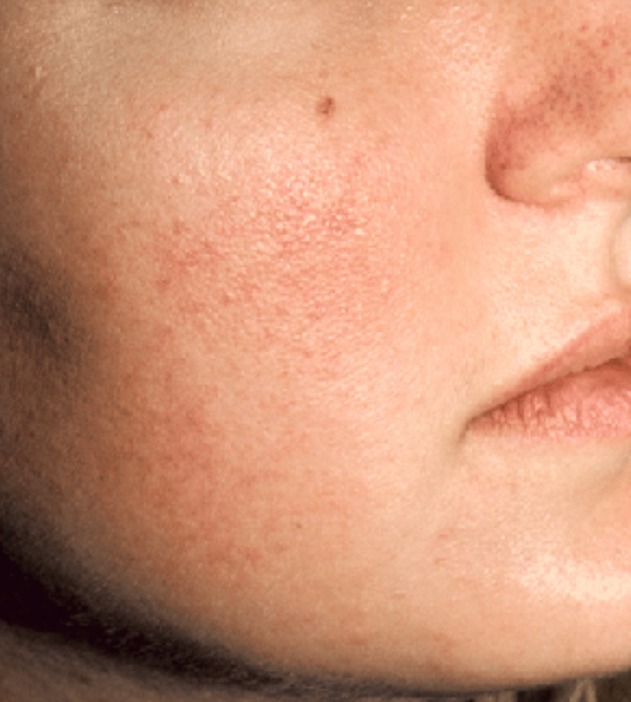
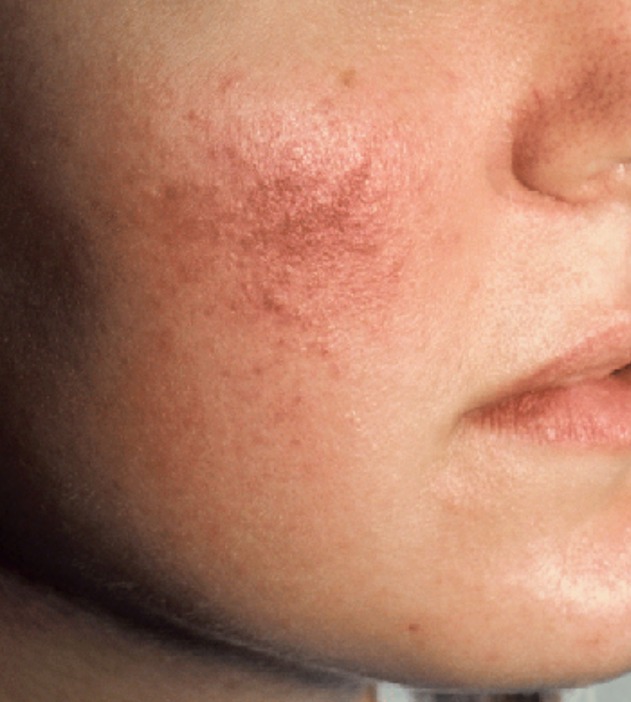
Photos courtesy of Candela (Vbeam®). Used with attribution. Individual results vary.
Frequently Asked Questions
What is the difference between red marks and real scars?
Red marks (post-inflammatory erythema) are dilated capillaries in otherwise normal skin, and brown marks (post-inflammatory hyperpigmentation) are excess melanin. Neither has lost tissue. True scars are depressions where dermal collagen was destroyed. Only the last is structural, and each requires a different treatment.
How does the Vbeam® laser help acne scarring?
Its 595 nm wavelength is absorbed by hemoglobin, so it targets the dilated vessels responsible for persistent redness after acne. It treats the red component, not depressions or brown pigment.
Which peels do you use for brown marks?
Salicylic acid peels and the Cosmelan® lightening system. Dr. Zaks does not use TCA or glycolic acid peels.
Can filler really improve depressed scars?
Yes, for atrophic scars where volume has been lost. Hyaluronic acid filler placed beneath the depression raises it toward the level of the surrounding skin. It is not appropriate for every scar type, which is why classification matters.
How many treatments will I need?
Acne scarring is treated in a series, typically spaced weeks apart, and often with more than one modality. Dr. Zaks will give you a realistic expectation at consultation rather than a promise of one-visit correction.
Do I need to treat my active acne first?
Yes. Treating scarring while inflammatory lesions continue to form means new marks keep appearing. Controlling active acne is both the first step in scar treatment and the best way to prevent further scarring.
I have deeper skin — is treatment safe for me?
Yes, with appropriate caution. Deeper skin tones are more prone to post-inflammatory hyperpigmentation, so Dr. Zaks uses conservative settings and prioritizes pigment-safe approaches and strict photoprotection with mineral sunscreen at SPF 30+.
Patient Reviews
“I have been going to Dr. Zaks for over 4 years. His outstanding skill, great bedside manner, warm personality, and artistry with Botox make me come back again and again!”
“I had Rosacea on my face for over 10 years. Dr. Zaks quickly reduced this embarrassing condition. Nobody else could help me. He's the best Dermatologist in LA hands down!”
“Dr. Zaks did not rush and he gave me 100% attention. He did not try to sell me product or convince me to try aggressive procedures which I appreciated.”
“Doctor took the time to explain the technical aspects of my condition, the treatment options and the expectations.”
About Dr. Boris Zaks, MD
Dr. Boris Zaks personally performs every procedure at Superior Beverly Hills Dermatology — never rotating assistants. He has practiced dermatology in Beverly Hills for more than twenty years.
- Board Certified — American Board of Dermatology (since 2002)
- Medical Degree — UCLA School of Medicine
- Chief Resident — Charles Drew University of Medicine & Science
- B.S. Biology — UCLA, Summa Cum Laude (age 19)
- Medical Board of California Expert Reviewer since 2009
- Super Doctors® 2023, 2024, 2025, 2026 & 2027 (Southern California)
- "Rock Star Dermatologist" — Glamour Magazine
Schedule Your Consultation
435 N. Roxbury Drive, Suite 408, Beverly Hills, CA 90210 · Monday–Friday · (310) 552-3376
Paid parking on-site, or free 2-hour parking at 461 N. Bedford Drive Garage, 1 block away
Areas Served
Patients seek Acne Scarring Treatment at Dr. Zaks’s Beverly Hills office from throughout greater Los Angeles: West Hollywood, Bel Air, Brentwood, Malibu, Pacific Palisades, Santa Monica, Westwood, Century City, Culver City, Marina del Rey, Studio City, Sherman Oaks, Encino, Calabasas, Burbank, Glendale, Pasadena, Manhattan Beach, Hermosa Beach, Torrance, Long Beach, Newport Beach, and Irvine.