Beverly Hills Dermatology
Rosacea Treatment in Beverly Hills
Non-laser medical management for the inflammatory component, plus the Vbeam® pulsed dye laser for redness and visible vessels — typically a series of five treatments.
- Verified Reviews
- 792
- Overall Rating
- 4.77★
- Bedside Manner
- 4.84★
- Years in Practice
- 20+
Overview
Rosacea is a chronic inflammatory condition of the central face involving both a vascular component — flushing, persistent background erythema, and telangiectasias — and an inflammatory component of papules and pustules. Neurovascular dysregulation, an altered cutaneous immune response, and Demodex mites all contribute. Because two different mechanisms are at work, medical therapy alone often controls the bumps while leaving the redness and vessels untouched, which is why patients so often feel only partly treated.
Dr. Zaks treats both. Non-laser medical management includes topical metronidazole, azelaic acid, and ivermectin, topical brimonidine for episodic erythema, and oral therapy such as low-dose doxycycline for its anti-inflammatory effect in moderate to severe inflammatory disease, along with identification of your individual triggers. For the vascular component he uses the Vbeam® pulsed dye laser, whose 595 nm wavelength targets oxyhemoglobin within dilated vessels. A series of five treatments is typical. Rosacea is a medical diagnosis, and evaluation and non-laser medical management are covered by most major PPO plans and Medicare.
Treatment Approach
Vbeam® Pulsed Dye Laser
595 nm light absorbed by oxyhemoglobin collapses the dilated vessels responsible for redness and telangiectasias. A series of five treatments is typical.
Topical Anti-Inflammatories
Metronidazole, azelaic acid, and ivermectin reduce papules and pustules; ivermectin also addresses the Demodex contribution.
Topical Brimonidine
A vasoconstrictor that temporarily reduces persistent facial erythema, useful for episodic control.
Oral Therapy
Low-dose doxycycline is used for its anti-inflammatory effect in moderate to severe inflammatory rosacea, alongside topical treatment.
Trigger Identification
Heat, sun, alcohol, spicy food, stress, and certain skincare products commonly provoke flares. Identifying yours reduces flare frequency.
Ocular and Phymatous Rosacea
Eye involvement and thickening of the nasal skin are recognized subtypes requiring specific management and, at times, coordination with ophthalmology.
The Treatment Experience
Diagnosis and subtype assessment
Dr. Zaks confirms the diagnosis, distinguishes rosacea from acne and seborrheic dermatitis, and identifies which components — vascular, inflammatory, or both — are driving your presentation.
Medical regimen and trigger plan
A prescription regimen is built for your subtype, with a gentle skincare routine, daily mineral sunscreen at SPF 30+, and a specific list of your likely triggers.
Vbeam® laser series
Laser sessions address redness and visible vessels, typically as a series of five. Anesthesia cream is not required, and Dr. Zaks uses gentle, longer-pulse settings with integrated cryogen cooling so patients return to normal activity the same day.
Long-term maintenance
Rosacea is chronic. Maintenance topicals, daily mineral sunscreen at SPF 30+, and occasional laser touch-ups keep control between flares.
Before & After
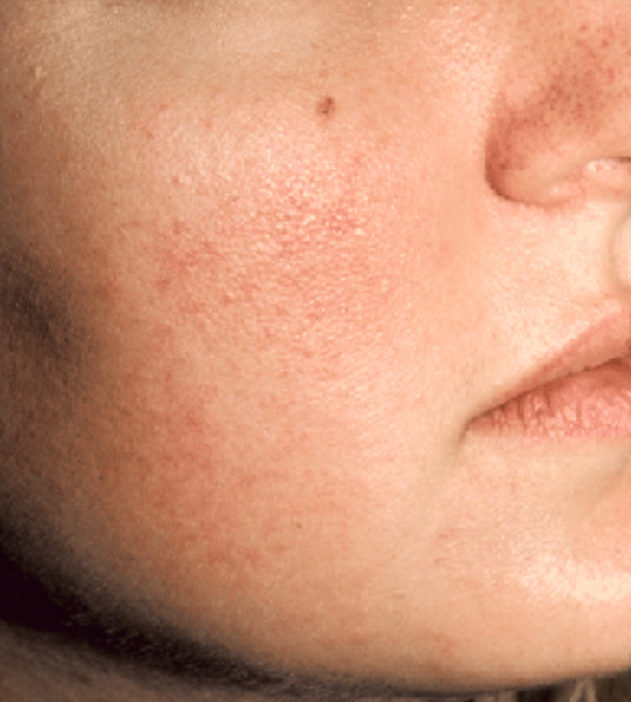
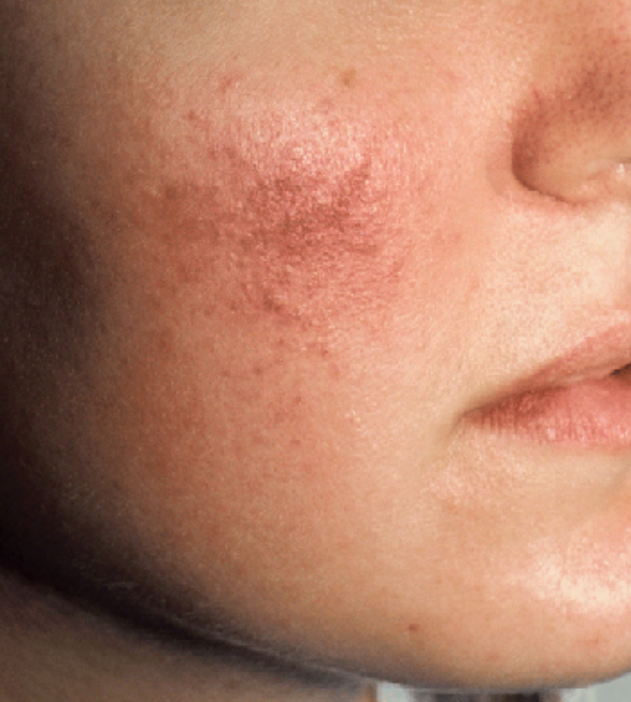
Vbeam® pulsed dye laser before-and-after photography. Results may vary.
Frequently Asked Questions
Can rosacea be cured?
No, but it can be controlled very well. Rosacea is a chronic condition; the goal is sustained control of both the redness and the inflammatory bumps with maintenance therapy.
Why do I need laser in addition to prescriptions?
Topical and oral medications work primarily on the inflammatory component — the papules and pustules. Dilated blood vessels and persistent background redness need a vascular treatment, which is what the Vbeam® laser provides.
How many laser treatments will I need?
A series of five treatments is typical, spaced several weeks apart, with occasional maintenance sessions afterward.
Does Vbeam® treatment for rosacea hurt, and is there downtime?
Anesthesia cream is not required — the device's cryogen cooling makes each pulse tolerable, described by most patients as a brief warm snap. Dr. Zaks uses gentle, longer-pulse settings, so aside from mild redness for a few hours most patients return to normal activity right away.
Is my rosacea actually acne?
They can look similar, and both cause facial papules, but rosacea also involves flushing, persistent central erythema, and visible vessels, and it typically lacks comedones. The distinction matters because treatments differ.
Is rosacea treatment covered by insurance?
Rosacea is a medical diagnosis, so evaluation and non-laser medical management are covered by most major PPO plans and Medicare. Laser coverage varies by plan, and our office will review costs with you before treatment.
What triggers should I avoid?
Common triggers include sun exposure, heat, hot beverages, alcohol, spicy foods, stress, and harsh skincare. Triggers are individual, so Dr. Zaks will help you identify your own pattern.
Patient Reviews
“I have been going to Dr. Zaks for over 4 years. His outstanding skill, great bedside manner, warm personality, and artistry with Botox make me come back again and again!”
“I had Rosacea on my face for over 10 years. Dr. Zaks quickly reduced this embarrassing condition. Nobody else could help me. He's the best Dermatologist in LA hands down!”
“Dr. Zaks did not rush and he gave me 100% attention. He did not try to sell me product or convince me to try aggressive procedures which I appreciated.”
“Doctor took the time to explain the technical aspects of my condition, the treatment options and the expectations.”
About Dr. Boris Zaks, MD
Dr. Boris Zaks personally performs every procedure at Superior Beverly Hills Dermatology — never rotating assistants. He has practiced dermatology in Beverly Hills for more than twenty years.
- Board Certified — American Board of Dermatology (since 2002)
- Medical Degree — UCLA School of Medicine
- Chief Resident — Charles Drew University of Medicine & Science
- B.S. Biology — UCLA, Summa Cum Laude (age 19)
- Medical Board of California Expert Reviewer since 2009
- Super Doctors® 2023, 2024, 2025, 2026 & 2027 (Southern California)
- "Rock Star Dermatologist" — Glamour Magazine
Schedule Your Consultation
435 N. Roxbury Drive, Suite 408, Beverly Hills, CA 90210 · Monday–Friday · (310) 552-3376
Paid parking on-site, or free 2-hour parking at 461 N. Bedford Drive Garage, 1 block away
Areas Served
Patients seek Rosacea Treatment at Dr. Zaks’s Beverly Hills office from throughout greater Los Angeles: West Hollywood, Bel Air, Brentwood, Malibu, Pacific Palisades, Santa Monica, Westwood, Century City, Culver City, Marina del Rey, Studio City, Sherman Oaks, Encino, Calabasas, Burbank, Glendale, Pasadena, Manhattan Beach, Hermosa Beach, Torrance, Long Beach, Newport Beach, and Irvine.